Quynh Ngoc Pham
Content Manager
A Complete Guide About Natural Language Processing AI
5 minutes read
Audio description available
August 04, 2023
Natural Language Processing (NLP), a cutting-edge subfield of Artificial Intelligence (AI), teaches robots how to interpret and interact with human language. Computers can analyze, understand, and synthesize natural language using NLP, allowing humans and robots to communicate in real time. This guide explores the fundamental concepts, uses, benefits, and limitations of Natural Language Processing AI. Whether you are a tech enthusiast or a business leader, join us as we embark on a journey to discover the power and possibilities of NLP and AI.
Understanding Natural Language Processing AI
What is Natural Language Processing (NLP)?
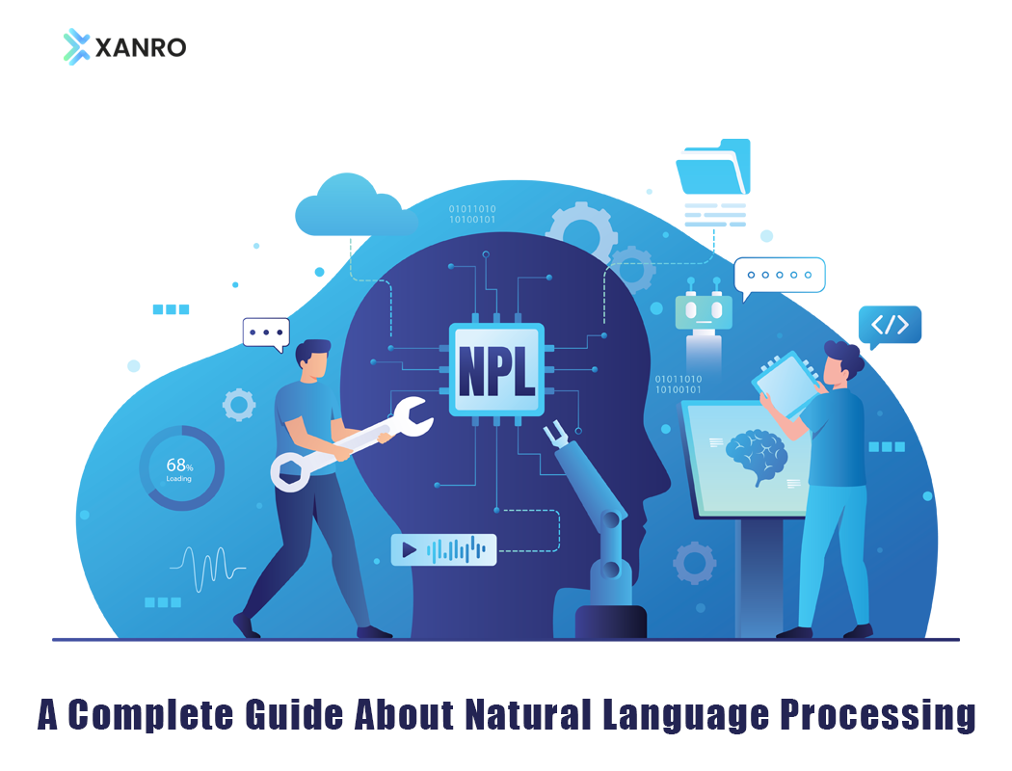
Natural Language Processing (NLP) is an Artificial Intelligence (AI) discipline that teaches robots to understand and process human language. It entails the creation of algorithms and models that allow computers to analyze text or speech data, extract pertinent information, and respond like humans. Natural Language Processing AI allows seamless interaction between humans and machines, powering various applications like virtual assistants, chatbots, language translation, sentiment analysis, and more.
NLP tasks
NLP encompasses various tasks and techniques to enable machines to process and comprehend natural language effectively. Some of the critical functions performed by NLP include:
Sentiment Analysis: Determining the emotional tone or sentiment expressed in a text, such as whether it is positive, negative, or neutral. Sentiment analysis gauges customer feedback, reviews, and social media sentiment.
Named Entity Recognition (NER): Identifying and classifying entities such as names of people, locations, organizations, dates, and other specific items in a given text. NER is crucial for information extraction and knowledge retrieval.
Machine Translation: Text or spoken translation from one language to another, allowing cross-lingual communication and breaking down linguistic barriers.
Text Classification: Categorizing text into predefined classes or categories based on content. Some everyday tasks include spam detection, topic classification, and sentiment analysis.
Language Generation: Creating coherent and contextually relevant human-like responses or text, or Language generation (chatbots, virtual assistants, and automated content creation).
How does NLP work?
NLP involves a combination of linguistic rules, statistical models, and machine learning algorithms to process and understand human language. The process of NLP can be broken down into several stages:
Tokenization: Breaking down sentences or paragraphs into smaller units, such as words or phrases (tokens), to facilitate analysis.
POS Tagging: Understanding the functions and relationships of each word in a phrase by giving it a grammatical tag, such as a noun, verb, or adjective.
Syntax and Semantic Analysis: Analyzing the grammatical structure of sentences (syntax) and understanding the meaning behind the language (semantic analysis).
Machine Learning: NLP models are trained on vast quantities of annotated data to find patterns and representations in language. Neural networks and other deep learning approaches have significantly improved NLP tasks.

Applications of Natural Language Processing AI
Natural Language Processing (NLP) AI finds various applications across various domains, transforming how we interact with technology and improving efficiency in different tasks.
Virtual Assistants
AI-powered virtual assistants like Siri, Alexa, or Google Assistant leverage NLP to respond to voice commands, answer questions, and perform tasks. These virtual assistants can converse with humans intelligibly since they are built to comprehend natural language. They can set reminders, schedule appointments, provide weather updates, and perform numerous other tasks based on user commands.
Machine Translation
NLP plays a critical role in driving language translation services, enabling smooth communication between speakers of different languages. Machine translation applications, like Google Translate, use NLP algorithms to convert text from one language to another in real time. This technology has revolutionized global communication, breaking language barriers and fostering cross-cultural connections.
Chatbots and Customer Support
NLP-driven chatbots offer instant and automated customer support, reducing response times and enhancing customer satisfaction. These chatbots can handle common inquiries, provide product information, assist in troubleshooting, and guide users through various processes. Chatbots offer quick and efficient support to improve customer experiences and operational efficiency.
Speech Recognition Systems
NLP technology is fundamental in speech recognition systems, converting spoken language into text and powering voice-controlled devices and transcription services. These systems are extensively used in voice assistants, voice-enabled smart devices, and transcription applications, making voice interactions with technology more accessible and convenient.
Natural Language Generation
NLP-powered natural language generation applications help automate content creation and produce high-quality content faster. This technology finds applications in automated report generation, content summarization, and personalized content recommendations.
Read more: Unleashing the Power of Computer Vision Applications in Finance, Banking, and Insurance
What are the benefits of NLP?
Natural Language Processing AI offers many practical benefits across industries, empowering organizations to streamline operations, make smarter decisions, and enhance customer satisfaction.
Efficient Data Analysis
NLP allows organizations to process vast quantities of unstructured textual data, such as customer feedback, social media posts, and online reviews. By evaluating this data, businesses can learn important information about their customers' attitudes, preferences, and problems. This data-driven approach aids in making informed decisions, improving products and services, and staying ahead of the competition.
Enhanced Customer Service
NLP-driven chatbots and autoresponder systems like Google Cloud Contact Center AI (CCAI) enable real-time customer interaction and support. These sophisticated AI-enabled systems can interact with customers in natural language, providing personalized and intuitive assistance. Customers can get help quickly through conversational self-service, solving everyday problems without human intervention. What's more, through past interactions and interests, businesses can provide personalized experiences to customers. This fosters stronger customer relationships and improves overall satisfaction.
Seamless Handover to Human Agents
In cases where customer issues are more complex or require human empathy, NLP-driven systems can seamlessly transfer customers to human agents. These systems equip human agents with valuable insights and context from the initial conversation, ensuring a smooth transition and a better understanding of customer needs.
Streamlined Processes
NLP contributes to streamlining various business processes by automating repetitive tasks, such as document categorization, information extraction, and content summarization. This automation enhances efficiency, minimizes errors, and accelerates decision-making processes.
Insights for Process Improvement
Businesses can extract actionable insights from customer interactions thanks to this. Contact center leaders can analyze the history of calls and customer interactions to identify recurring issues, trends, and areas for improvement. This data-driven approach helps coach employees, optimize processes, and enhance call outcomes.

Challenges
Natural Language Processing AI, while powerful and versatile, faces various challenges and holds significant potential for future development and applications.
Dealing with Language Ambiguity
Human languages are very context-dependent, and understanding context is essential for correct understanding. NLP models can have difficulty capturing nuanced context, leading to misinterpretations of sentences or questions. Resolving such ambiguities remains a challenge in natural language understanding.
Data bias
Adapting NLP models when dealing with out-of-domain data remains a challenge. Adapting NLP models to out-of-domain data is also tricky when it is not possible to guarantee that it can be fully processed. In addition, NLP Models can learn and maintain biases present in the training data, resulting in erroneous predictions or responses. Addressing and minimizing biases in NLP models is critical to ensuring fairness and ethical use.
Integration and transparency
Integrating NLP with existing business systems and processes can be complex. Ensuring interoperability and seamless integration with diverse software platforms can pose technical challenges. Additionally, as Natural Language Processing AI models become more complex, they tend to take more work to interpret and solve. This lack of transparency can cause concern, especially in mission-critical applications like healthcare or finance.
Conclusion
Natural Language Processing AI has revolutionized how computers interact with humans, enabling intelligent language understanding and communication. NLP applications are transforming various industries, from virtual assistants to language translation and sentiment analysis. Besides offering great potential, it faces challenges related to adaptability, data processing and security, and domain adaptability.
However, you don't have to overcome these challenges alone. Our advanced NLP technologies empower businesses to efficiently analyze data, enhance customer experiences, and streamline processes. Let Xanro Lab be your partner in harnessing the power of Natural Language Processing AI for transformative growth and success in your industry.